
Construction Website Design That Gets You on the Bid List, Not Just Found
Websites for commercial contractors, built so when a developer, GC, or owner looks you up, they see why you’re the right fit
+
+
Construction Website Design for Commercial Contractors
IdealRev designs websites for commercial contractors and subcontractors. The site is built for the developer, GC, or owner who heard your name and is checking you out: projects organized by market and size, client quotes with real names, prequal information a GC can find without emailing you, and a capability statement they can forward. We write the content. Most builds take six to ten weeks and are priced as a one-time project.
Most Construction Websites Are Built to Look Good, Not to Win Work
Most contractor websites came from a template. Somebody dropped in the logo, a few project photos, and a list of services. It looks fine. It just isn’t built for the person actually using it.
That person is a developer, GC, or property manager who heard your name and is checking you out before they decide whether to call. They want to know what you’ve built, at what size, for whom, and whether you’ve done their kind of project before. Most sites don’t answer any of that, so they move on to the one that does.
We build the site for that moment. Projects organized the way buyers look for them, proof from the people who sign contracts, and a capability statement they can forward to their boss. Designed to look like a company worth calling, and built so your team can keep it current without calling us.
Websites Built Around How Your Clients Check You Out
Before someone calls you, they look you up. We build the site so that when they do, everything lines up with what they heard and gives them a reason to keep going.
Design That Looks Like a Company Worth Hiring
Clean, modern, and specific to your market. A site that feels as professional as the work you do, on a phone or a desktop.
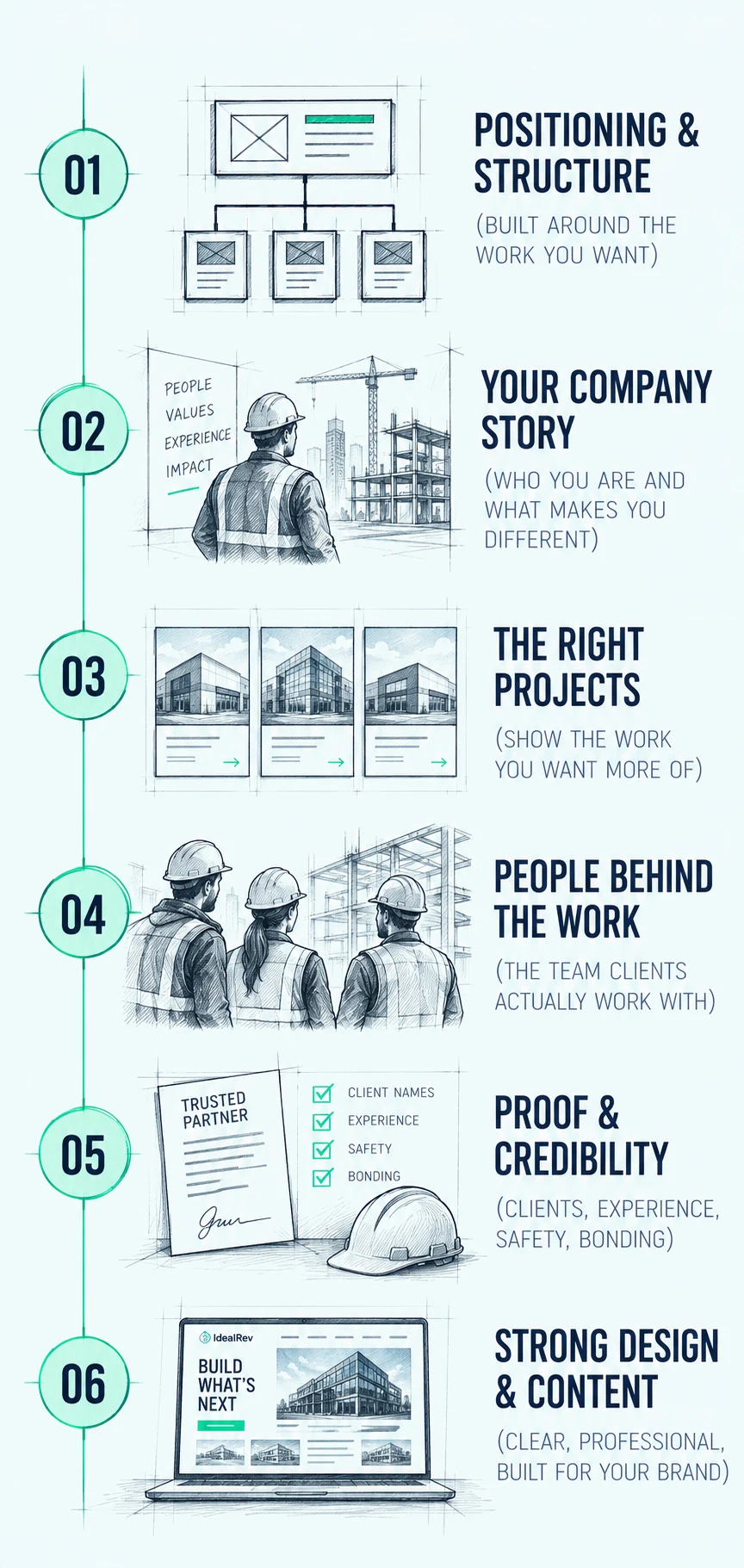
Positioning and Structure
We get clear on the projects you want more of and who decides on them, then organize the site around that. A developer looking for medical office work should find it in one click.
Project Pages That Answer Real Questions
Market, size, delivery method, schedule, and where you’re comfortable, the value. Sortable by the categories your clients actually care about.
Proof and Credibility
Client quotes with real names and companies. A team page with the people who will be on the job. Safety record, bonding, and the certifications that get you through prequal.
Materials They Can Forward
A capability statement and project sheets someone can download and send to their boss without asking you for them.
Easy to Keep Current
Fast, secure, mobile-first, and simple enough that your team can add a new project without calling a developer.
Commercial Construction Website Design
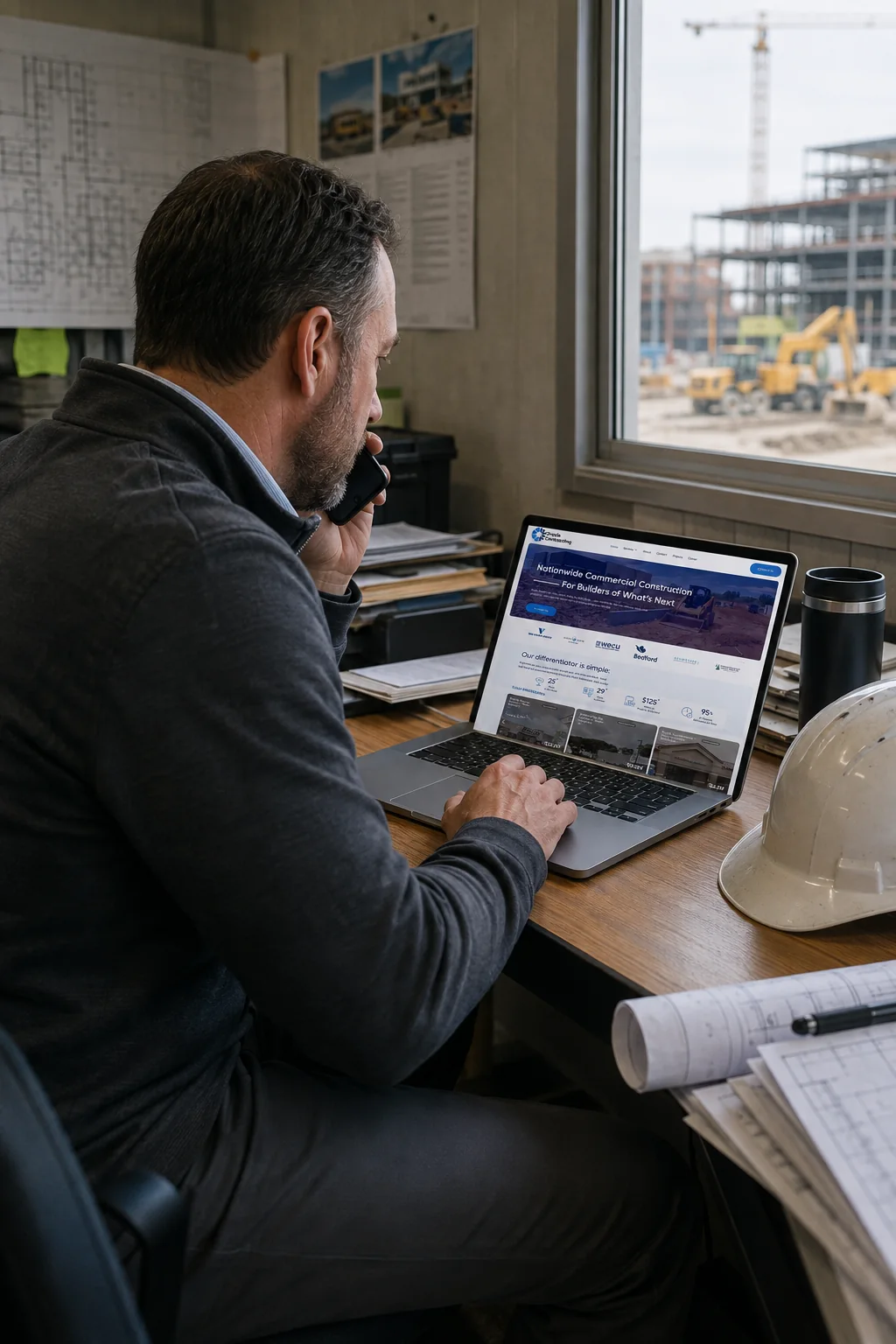
Commercial work is won before the bid goes out. Your website is what a developer, owner’s rep, or GC looks at when your name comes up in a meeting you’re not in.
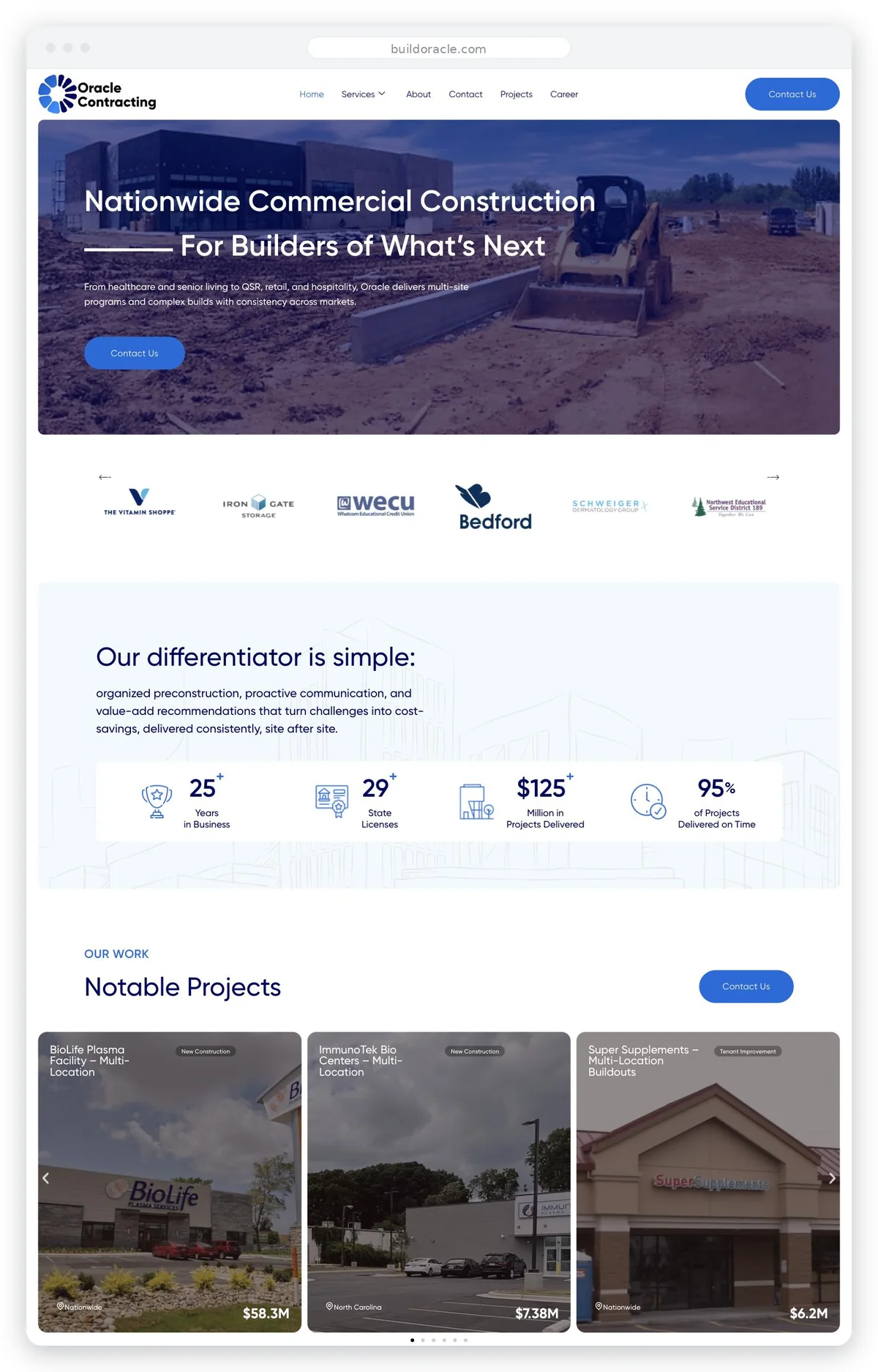
That changes what belongs on it. Projects organized by market. Delivery methods stated plainly. Prequal information a GC can find without emailing you. Client quotes from the people who sign contracts.
We build it so a project manager can forward one link and have it do the talking.
A Website You’re Confident Sending to Anyone
- Developers, GCs, and owners can see your project size and market fit in under a minute
- You have real client names backing up what you say about yourself
- Your reps send the site during follow-up instead of working around it
- Prequal and capability information is there for anyone who needs it
- New projects go up while they still matter
What Working Together Looks Like
We get clear on your projects, your ideal clients, and how you actually win work
We simplify how you explain what you do so the site is clear, consistent, and built around the right audience
Structure, design, copy, and project pages. We write the content, since asking a contractor to write their own website is how sites sit half finished for a year
Redirects handled so you keep your rankings, analytics set up, and your team shown how to add new work in a few minutes
Who This Is For
Ideal Fit
- Commercial contractors and subcontractors
- Companies actively doing business development who need the site to back them up
- Owners whose website is older than their last three best projects
- Teams moving into a new market or building type
Not a Fit
- Businesses expecting a website alone to bring in projects
- Companies looking for flashy design without substance
- Businesses that want a site built once and never touched again
What a Website Will and Won’t Do
A website confirms you for people who already have your name. It doesn’t create the conversations on its own. If the real problem is nobody’s calling, that’s business development, and we’re glad to talk about that too.
We take website-only projects. Most run as a one-time build, priced on page count and how much content we write. We’ll scope it on the call.
Common Questions About Construction Website Design
What should be on a commercial construction website?
Project pages with market, size, and delivery method. Client quotes with names and companies. Your safety record, bonding, and licenses. A team page with real people. And something to download, usually a capability statement, that someone can forward internally. Most contractor sites have the photos and the services list and stop there.
How much does a construction website cost?
Depends on page count, how much content we write, and whether your project information exists anywhere usable today. It’s a one-time project, not a retainer. The writing and the project data take longer than the design.
How long does it take?
Usually six to ten weeks. The holdup is almost never design. It’s getting project details, photos, and client permission to use names.
Do you write the content?
Yes. We pull it from your proposals, interview decks, and a couple of conversations with your team.
Can you redesign our existing site instead of starting over?
Often. If the structure is sound and the problem is the message and the proof, rebuilding the content on your existing platform is faster and cheaper. We’ll tell you which one you need.
Do we need a new website or better business development?
If your name is coming up and people are checking you out, the website matters. If nobody is saying your name yet, a new site won’t change your year. That’s what the call is for.
How often should a construction company redesign its website?
When the site stops matching the company. If your three best projects are not on it, your markets have shifted, or a developer would not recognize the firm from the homepage, it is time. That is usually every four to six years for a full rebuild, with projects added as they finish in between. A site that is updated every quarter rarely needs a rebuild.
If Your Website Isn’t Helping You Win Work, Let’s Talk
We’ll walk through your current site the way a developer would, tell you what’s missing, and what it would take to fix it